
Meditation
When You Lose Control: Quick Grounding
To return contact to feet and seat when thought speeds and the chest narrows. There is no diagnosis or treatment claim.
- Meditation
- 10 guided steps
- 8 silent pauses
- Kök
AT YOUR PACE · STEP BY STEP
One Step. One Breath. A Little Space.
Explore the practice below. When ready, choose “Start Meditation” to follow each step in full screen.
Back to the startAllow the seat beneath you to carry your weight. Nothing needs to be solved as a test. See a door handle or window ledge in the mind; that is the exit. If the eyes are closed, notice shades of dark; if open, soften the gaze on one point. If attention wanders, do not count it as failure; return to contact.
Silence (25s)
Preparation ends here. Bring attention to pressure under the heels, then to the sit-bones. Do not lengthen the breath; let the breath already present complete itself. Notice extra effort in jaw and shoulders without ordering a melt.
Silence (30s)
Do not build calm as a victory; contact is enough. There is no forcing. The title is a frame for attention, not a creed: Grounding When Anxious Feelings Rise.
Silence (30s)
Fast thought and slow feet can stand together. Do not hunt for the correct sensation. Meet what is here today. The two sides of the body need not match.
Silence (35s)
On the exhale, allow extra effort in the belly to loosen a little. This practice is not a treatment protocol; it is an attention drill. Do not fuse tradition with today's seat.
Silence (35s)
Widen slightly: room temperature, cloth, the support at your back. Do not correct any of it. To return contact to feet and seat when thought speeds and the chest narrows. There is no diagnosis or treatment claim.
Silence (40s)
If a commentary starts inside, hear it and do not finish the sentence. Return attention to where body meets the room. Bring attention to pressure under the heels, then to the sit-bones.
Silence (40s)
Take a glass of water or change rooms; no grand solution. Hold this as one concrete gesture, not a success list. No hurried result is required.
Silence (45s)
Notice hands and feet again. There is no rushed ending; let the practice thin out. Fast thought and slow feet can stand together.
Sounds are near and far again. See a door handle or window ledge in the mind; that is the exit. Lengthen the spine without strain, then change the seat or stance with a small movement.
THE PRACTICE ENDED, THE MATTER DID NOT
When You Lose Control: Quick Grounding has ended. The matter does not always end with it.
We do not hand you a ready-made list. The next step is chosen from where you stand after this practice.
No payment, no commitment. First you write what you want.
Deeper Reading
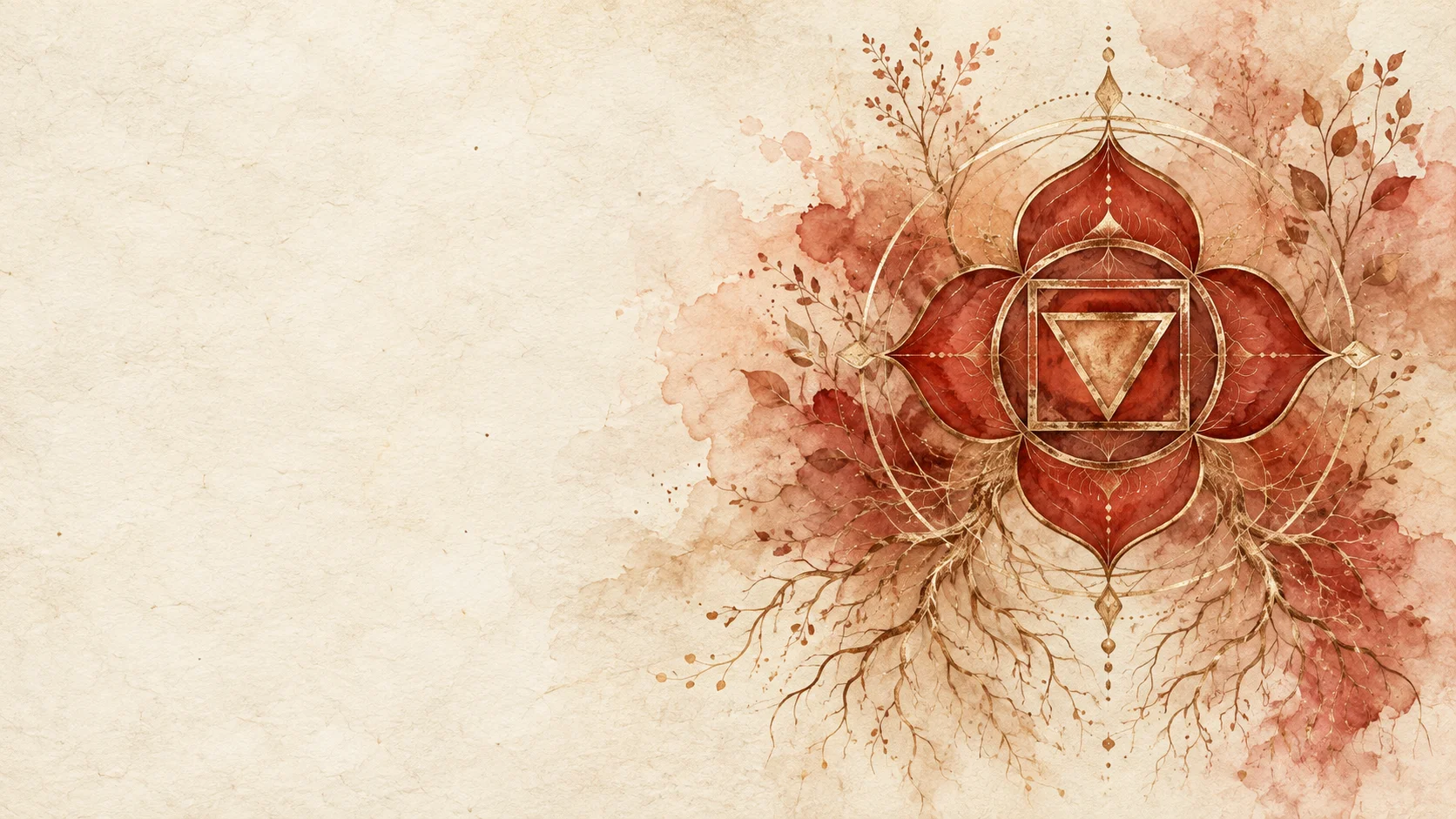
Kök Chakra
Muladhara
When You Lose Control: Quick Grounding
Kök çakra, bedenin en alt merkezinde toprakla bağ kurmayı hatırlatır. Güvenlik, aidiyet ve fiziksel varoluşun sembolik alanı olarak anılır. Meditasyonda ayakların, bacakların ve omurga tabanının farkındalığına davet eder.
- Color
- Kırmızı
- Element
- Toprak
- Location
- Omurga tabanı
- Mantra
- Lam
Grounding When Anxious Feelings Rise
To return contact to feet and seat when thought speeds and the chest narrows. There is no diagnosis or treatment claim.
Feet on the floor. Eyes may stay open. Mark the exit in the mind.
Orientation to body and environment is inspired by satipaṭṭhāna attention training. The word anxiety is ordinary speech here, not a clinical protocol.