

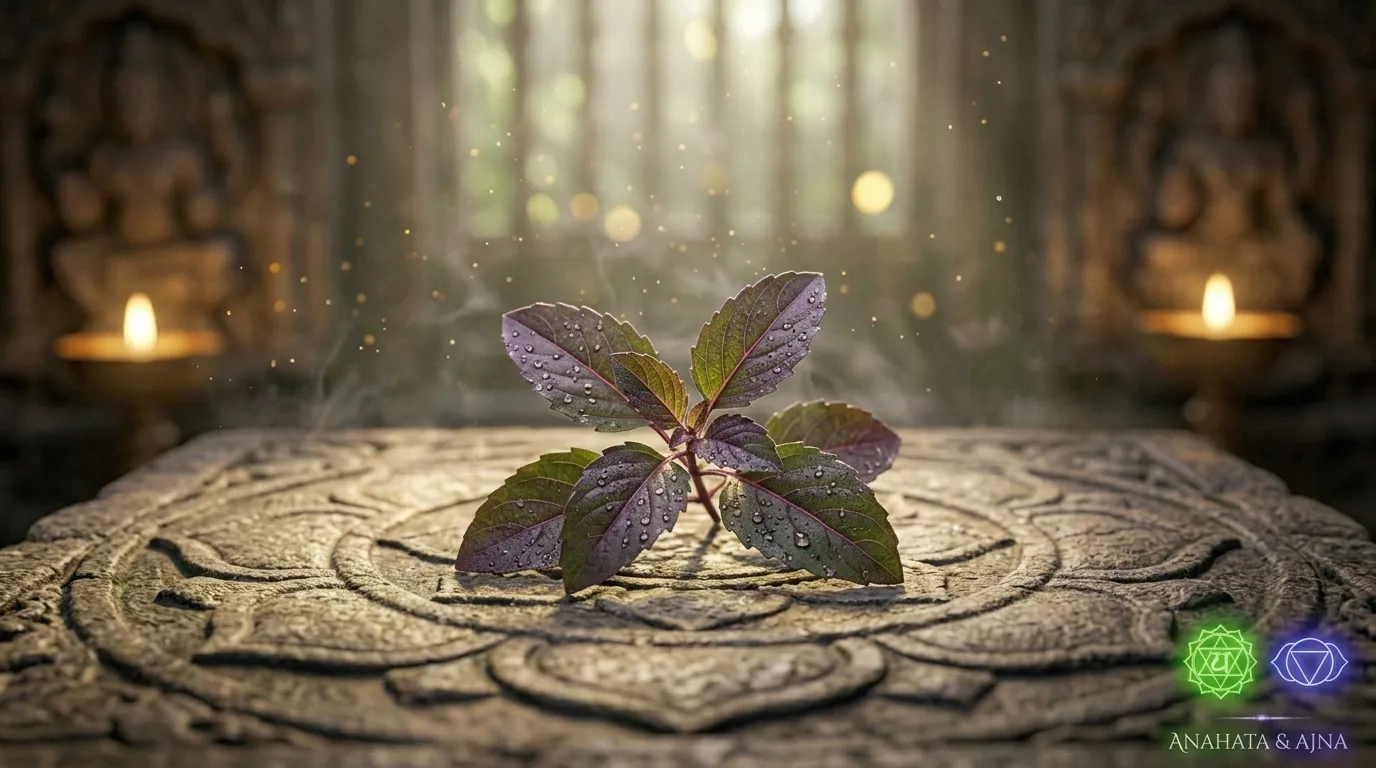
Herb
Tulsi
Stop searching for the sacred in distant temples. Tulsi grows on your threshold, waiting. In Hindu tradition, this leaf has always been the keeper of devotion, the guardian of the protected home, the plant that asks: will you tend me daily, and in tending me, transform yourself? The answer changes everything.
- Heart
- Crown
- Scientific name: ocimum tenuiflorum
- Love & Connection
Traditional associations
In Hindu belief and practice, Tulsi embodies devotion (bhakti), hospitality, the protection of sacred space, and the nearness of the divine at home. To tend Tulsi is to participate in an ancient practice of making the invisible visible, of transforming daily life into worship. The plant mirrors back to the caregiver their own capacity for reverence.
Specially sourced
Deep layers
About Tulsi
For those who understand that the sacred dwells not in pilgrimage, but in the tender attention given to a single living plant, Ocimum tenuiflorum—true Tulsi—becomes a mirror of devotion itself. This is not the commercialized 'holy basil' of blended markets; this is the authentic leaf, revered for centuries in Hindu household and devotional traditions, where the act of daily care transforms the mundane into the divine. Its green vitality, spiced warmth, and faint citrus notes carry the frequency of hospitality, protected threshold, and the permission to find the sacred at home. When you water its roots each dawn, when you offer its leaves with intention, you are not performing ritual—you are becoming ritual.
Yet wisdom demands clarity: concentrated tulsi preparations may interact with certain medicines, and pregnancy, nursing, childhood, or regular medication use require professional medical counsel before consumption. The spiritual power of this plant works through your intention and reverence, never replacing the guidance of healthcare professionals. True devotion honors both the plant's sacred presence and the body's need for safety. This botanical identity remains distinct—never confused with Ocimum basilicum or diluted commercial blends—so that your relationship to Tulsi remains pure and grounded in authentic tradition.
Story
In Hindu household and devotional traditions, Tulsi has never been merely a plant to be harvested; it is a living companion in the sacred geometry of home. The daily act of tending, watering, and honoring Tulsi transforms the caregiver as much as it nourishes the leaves. This is not mythology stripped of place—this is the living practice of millions, where the boundary between gardener and sacred dissolves.
Historical uses
For millennia, Tulsi has held place in Hindu households not as remedy but as relation. It stands on thresholds, in courtyards, at altars—a living symbol of devotion, protection, and the sacredness of home. The act of daily care is itself the healing and the teaching.
Cultural / spiritual uses
In Hindu belief and practice, Tulsi embodies devotion (bhakti), hospitality, the protection of sacred space, and the nearness of the divine at home. To tend Tulsi is to participate in an ancient practice of making the invisible visible, of transforming daily life into worship. The plant mirrors back to the caregiver their own capacity for reverence.
Aroma profile
A luminous blend of warm clove, green leaf vitality, faint citrus brightness, and dry spice—the scent of threshold and home, of protection and inner heat.
Preparation notes
Traditionally, Tulsi leaves are used fresh or dried in water-based preparations, offered with intention in the rhythm of daily practice. No dosage, extract regimen, or commercialized 'tea formula' is provided here; the preparation is a form of devotion, not a medical protocol. Always source authentic Ocimum tenuiflorum and consult professionals regarding consumption.
Season / harvest
Tulsi's leaves are gathered mindfully through warm seasons, yet the timing is never reduced to mere agricultural production. The relationship of care—the asking, the tending, the receiving—supersedes commercial rhythm. Each leaf taken is an exchange of devotion.
Safety notes
Concentrated tulsi extracts may interact with anticoagulants, diabetes medications, and immunosuppressants. Pregnant and nursing individuals must consult healthcare providers. Children should not consume without professional guidance. Those on regular medications must seek medical counsel before use. True reverence for Tulsi includes respecting the body's need for safety.
Origin
The true Tulsi is Ocimum tenuiflorum, a distinct species honored across the Indian subcontinent for over two thousand years. It must never be confused with the commercial 'holy basil' blends or Ocimum basilicum (sweet basil). Authentic Tulsi carries a specific biochemical and spiritual signature, cultivated not as crop but as household devotion.
Quick look
Scientific name: ocimum tenuiflorum
Properties
- Scientific name
- ocimum tenuiflorum
Which chakra is it known for?
Which chakra is it associated with?
- Heart
- Crown
Follow This Thread
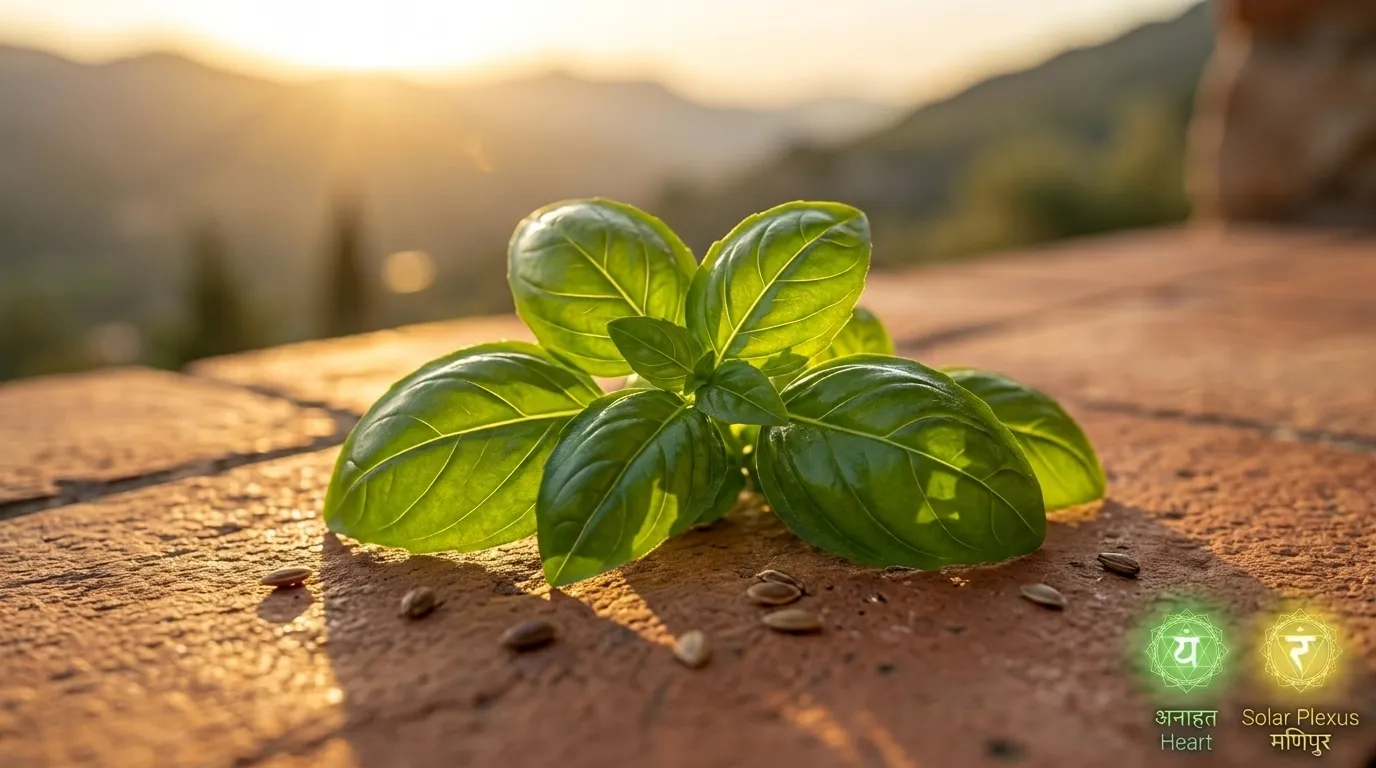
Herb
Sweet Basil
Shared intention: Love & Connection · Protection · Heart chakra theme
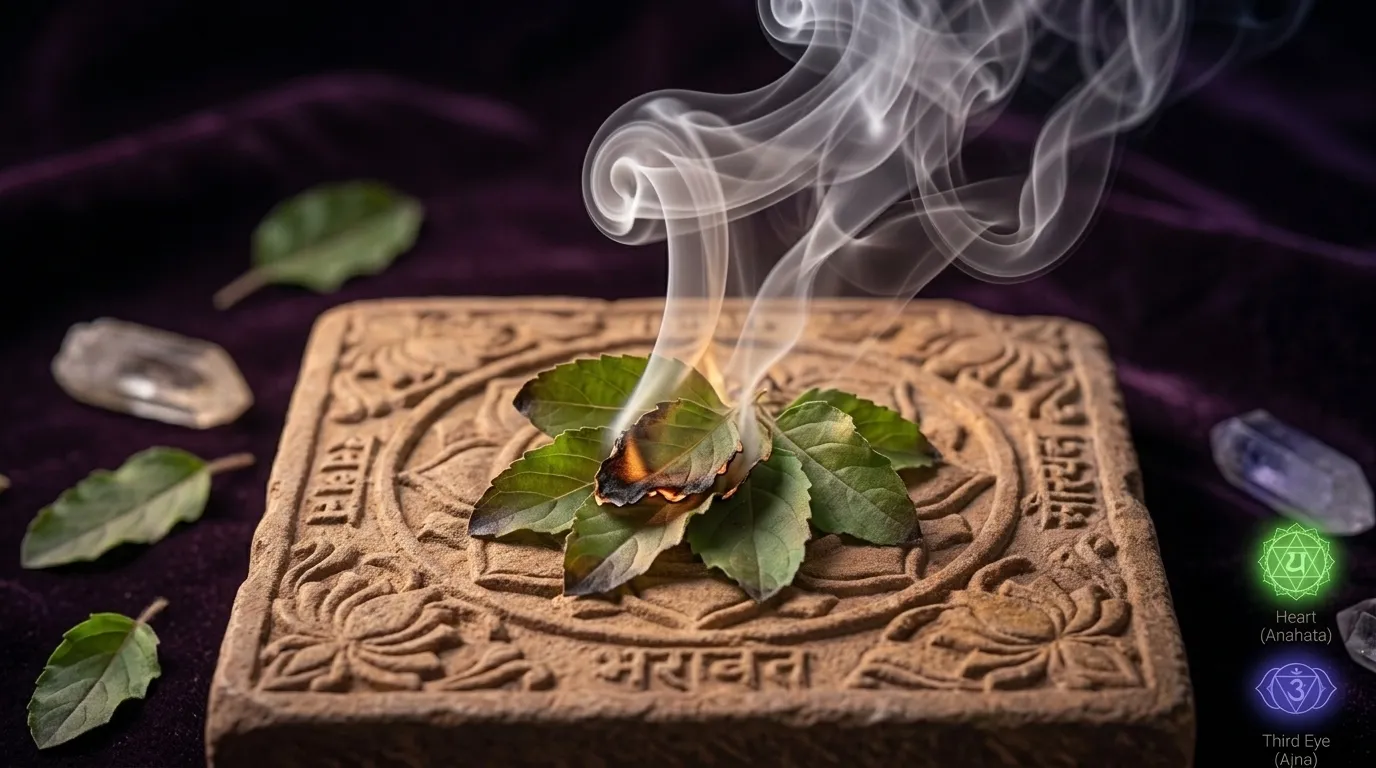
Incense
Tulsi Incense
Shared intention: Love & Connection · Calm

Meditation
Lunar Cycles: Inner Tempo and Recurrence
Shared intention: Love & Connection · Calm

Pendulum
The Open Heart Rose Quartz Pendulum
Shared intention: Love & Connection · Calm
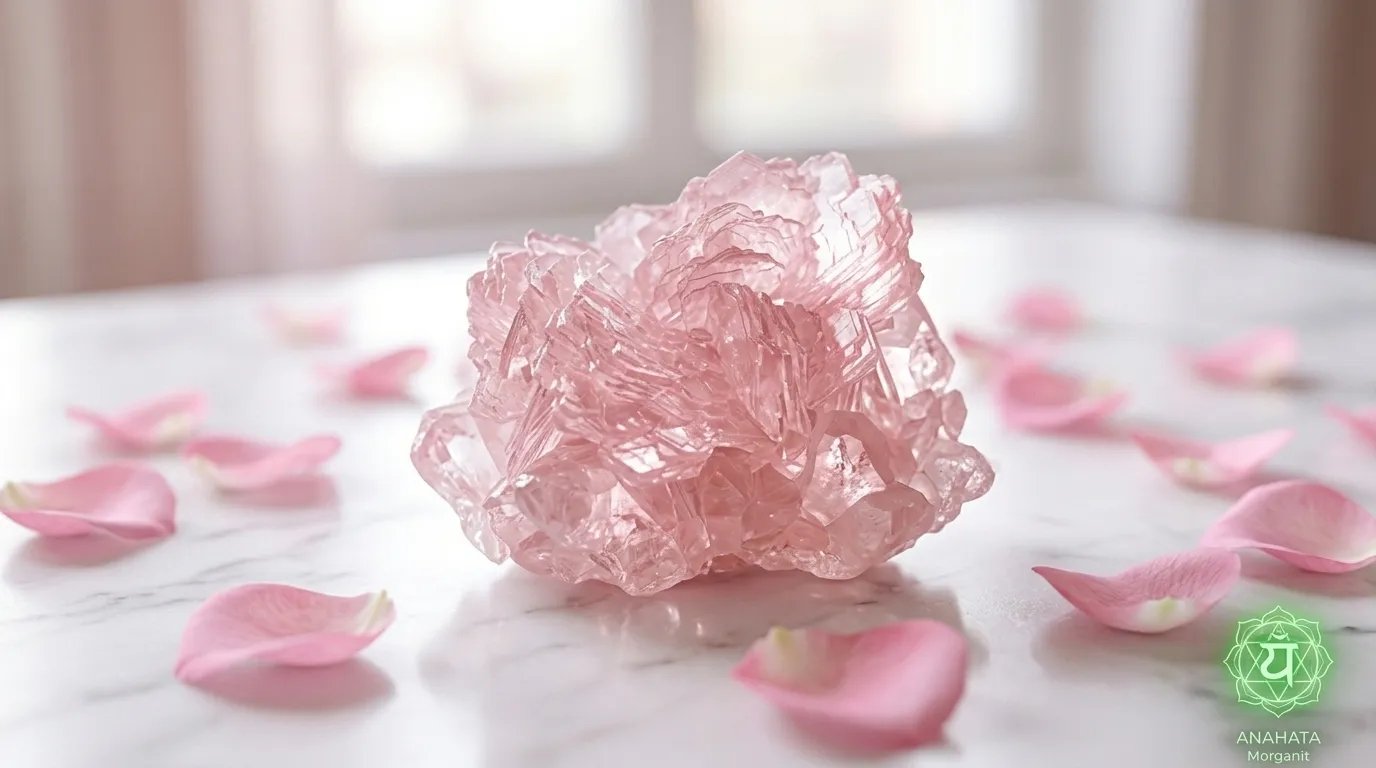
Stone
Morganite
Shared intention: Love & Connection · Calm
If you stayed this long on the Tulsi page, the matter may not be curiosity about herbs alone.
The chosen herb is sent in a solid walnut box with brass inlay, sealed to your name. Which herb walks with you is decided not from a list, but from what you share.
No payment, no commitment. First you write what you want.