

Herb
Dog Rose
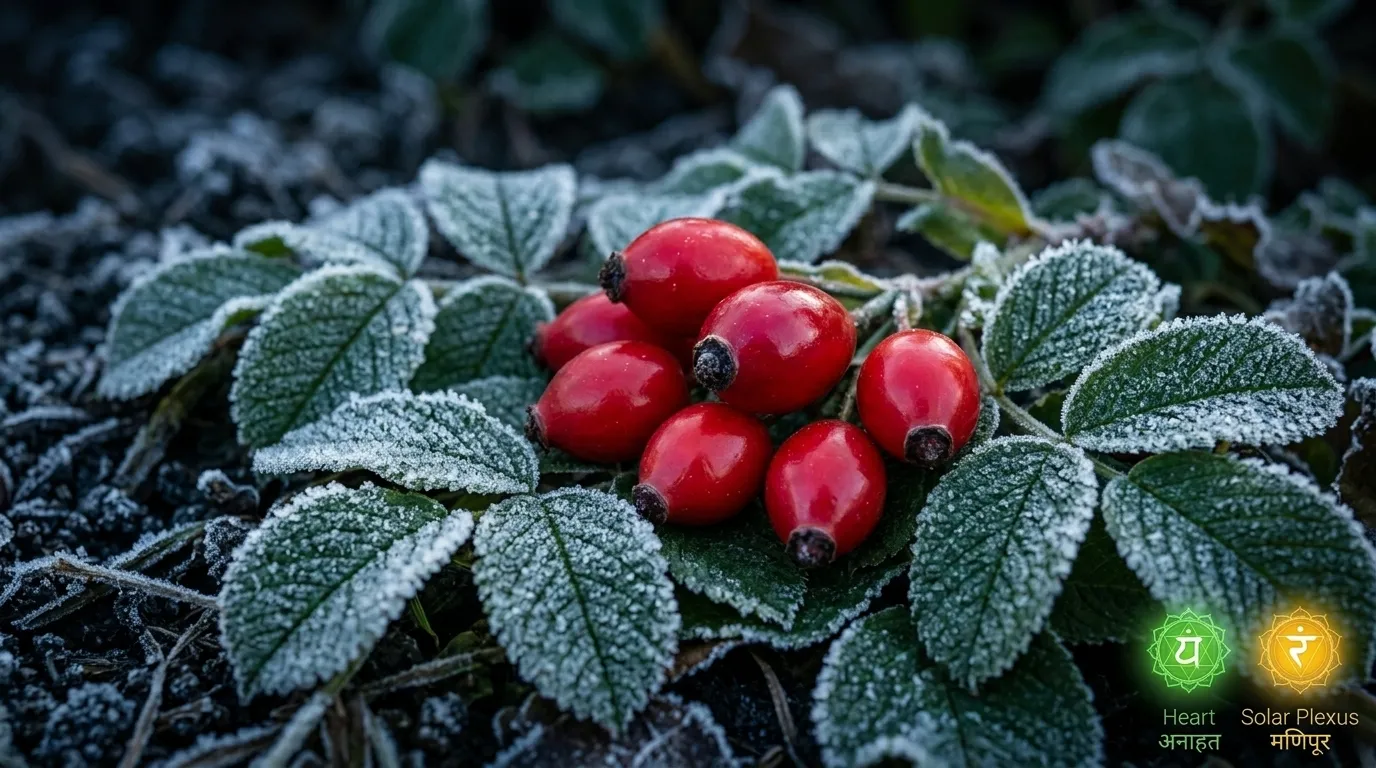
What if the thorns that wounded you were the very architects of your strength? Dog Rose—born from wild branches and autumn frost—carries the sacred frequency of transformation. Not a flower of softness, but of fire tempered into gold. This is the fruit that teaches: what survives in you is unstoppable.
- Root
- Heart
- Scientific name: rosa canina
- Courage
Traditional associations
In folk belief across Europe, the scarlet hip symbolizes the essence that remains after hardship—not diminished, but concentrated and potent. The thorn is honored as the keeper of medicine, and the fruit as the proof that beauty and strength persist through all seasons. Modern spiritual practice invokes the rosehip as a symbol of resilience reforged through adversity.
Specially sourced
Deep layers
About Dog Rose
For those seeking to reclaim their wholeness after hardship, Rosa canina offers far more than botanical distinction—it is a living testament to resilience. The false fruit of this wild rose, born upon thorny branches, carries within it the distilled essence of survival and quiet endurance. Unlike generic rose petals or oils from lesser species, true Dog Rose speaks a language older than memory: that beauty and vitality persist not despite the thorns, but because of them. When autumn arrives and the ruby hips ripen beneath grey skies, they teach the weary heart that what remains after loss is often the most precious gift—concentrated, potent, and unmistakably yours.
Yet true reverence for this plant demands honesty about its boundaries. The fine downy hairs nestled within the fruit can irritate delicate skin and mucous membranes and must be removed with care during preparation. If you are navigating pregnancy, nursing, taking regular medications, or preparing this for a child, seek professional medical guidance before use. The plant's spirit and the body's science must walk together in mutual respect. This text offers cultural and spiritual exploration, not medical dosage, diagnosis, or cure. Clean, authentic botanical material from trusted sources is sacred; spoiled or roadside-gathered fruit carries no blessing.
Story
In ancient European and West Asian traditions, the rosehip was gathered as autumn's final blessing—preserved in jams and infusions to carry the season's concentrated strength through winter's darkness. The thorny wild rose, Rosa canina, was revered not for delicate beauty, but for its fierce persistence. When a difficult season stripped the landscape bare, the scarlet hips remained—defiant, nourishing, alive with purpose.
Historical uses
In medieval European herbalism, rosehips were stewed and preserved to sustain vitality through winter months. Scandinavian, Eastern European, and British traditions incorporated them into syrups, jams, and medicinal preparations. They were valued not for comfort, but for concentrated endurance.
Cultural / spiritual uses
In folk belief across Europe, the scarlet hip symbolizes the essence that remains after hardship—not diminished, but concentrated and potent. The thorn is honored as the keeper of medicine, and the fruit as the proof that beauty and strength persist through all seasons. Modern spiritual practice invokes the rosehip as a symbol of resilience reforged through adversity.
Aroma profile
Tart, bright red fruit with notes of dried rose petal, woody seed, subtle spice, and the mineral whisper of autumn earth. Sharp, clean, untamed.
Preparation notes
Traditional preparation involves gentle cleaning of the whole fruit, complete removal of inner hairs (crucial for safe use), and brewing in hot water or incorporating into food preserves. No medical dosage, prescription, or therapeutic claim is offered. Always source clean, authenticated botanical material from reputable suppliers.
Season / harvest
The hips color and ripen in deep autumn, typically after the first frost. Harvest when fully ruby red, signaling peak ripeness and nutrient density. Do not gather immature green hips or spoiled fruit.
Safety notes
The downy hairs within the fruit are a primary irritant and must be completely removed before consumption or topical use. Do not gather from roadsides or contaminated areas. Spoiled, moldy, or fermented material should be discarded. Caution is advised for those with sensitive skin or mucous membranes. If you are pregnant, nursing, taking regular medications, or preparing this for a child, consult a healthcare professional before use.
Origin
The authentic Rosa canina is the wild rose native to Europe, West Asia, and North Africa, distinguished from cultivated roses and ornamental varieties. Its false fruit—the hip—develops from the flower's hypanthium and carries seeds crowned with fine, irritant hairs. This is not the rose of gardens; this is the rose of thorns and survival.
Quick look
Scientific name: rosa canina
Properties
- Scientific name
- rosa canina
Which chakra is it known for?
Which chakra is it associated with?
- Root
- Heart
Follow This Thread


If you stayed this long on the Dog Rose page, the matter may not be curiosity about herbs alone.
The chosen herb is sent in a solid walnut box with brass inlay, sealed to your name. Which herb walks with you is decided not from a list, but from what you share.
No payment, no commitment. First you write what you want.