

Herb
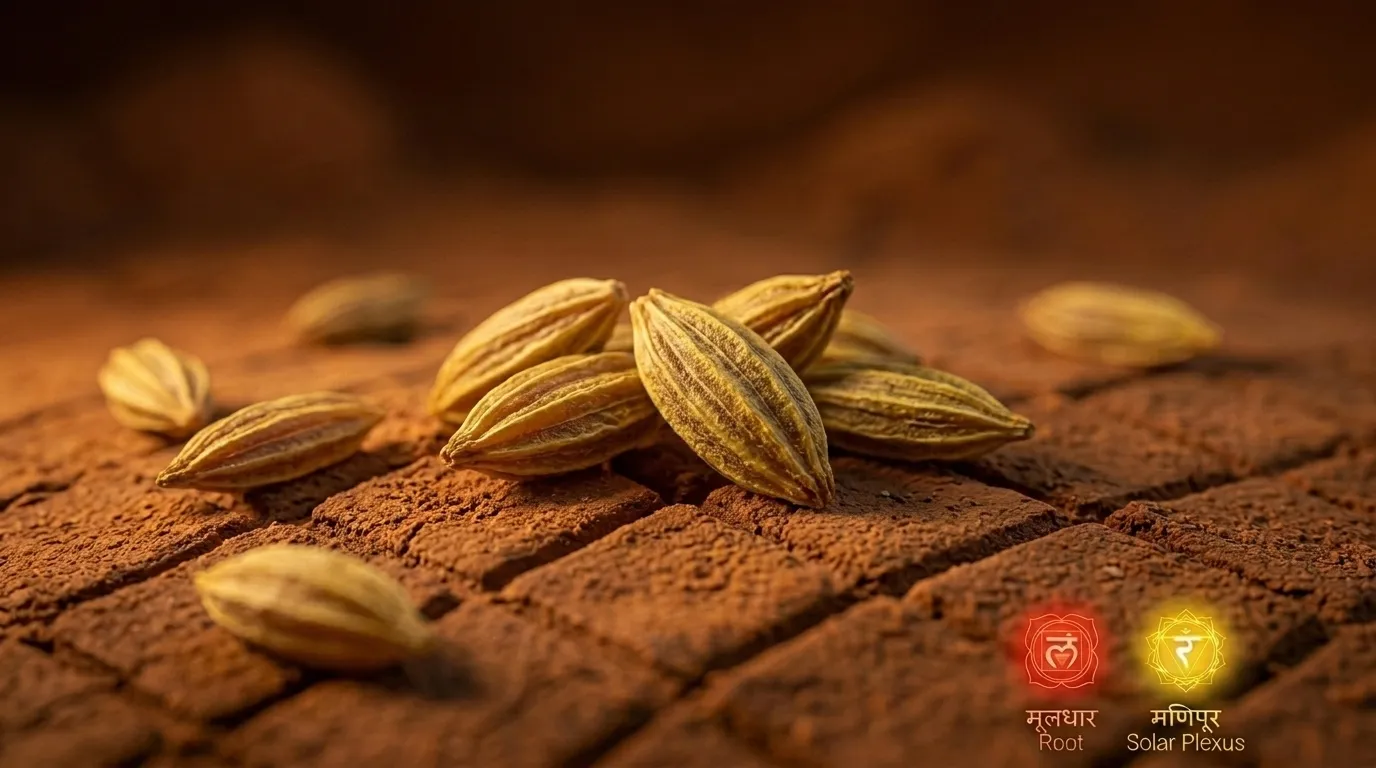
Cumin
Are you tired of believing that what you have is never enough? Cumin is not merely a spice; it is the earth's radical declaration that simplicity, when held with intention, becomes profound. For millennia, this humble fruit has transformed ordinary meals into sacred acts. Stop overlooking your own resources. It is time to steep your modest gifts in reverence and watch them bloom into their true power.
- Root
- Scientific name: cuminum cyminum
- Abundance
- Grounding
Traditional associations
In table-centered sacred practice, cumin's warmth adding depth to simple ingredients becomes the living symbol of a profound truth: that modest resources, held with reverence and intention, birth genuine transformation. To cook with cumin is to declare that you honor what you have and trust its power to nourish.
Specially sourced
Deep layers
About Cumin
For those who have learned to honor the small and seek depth within simplicity, the warming fruit of Cuminum cyminum carries centuries of alchemical wisdom. Unlike its distant cousins—black cumin, black seed, nigella—true cumin offers a grounding frequency that transforms humble ingredients into vessels of meaning. Its dry earth notes and warm spice speak to a sacred truth: abundance is not always measured in quantity, but in the intention you pour into what you already possess. When you steep this aromatic fruit into your daily sustenance, you are not simply flavoring food; you are performing an act of recognition, declaring that modest resources, touched by presence and care, birth genuine transformation.
Yet discernment must guide your path: cumin works through your mindful engagement and the integrity of your ingredients, not through promises of cure. Those with sensitivities to the parsley family—the Apiaceae—must proceed with awareness. If you navigate pregnancy, breastfeeding, childhood, or regular pharmaceutical companions, concentrated extracts and essential oils demand professional evaluation before use. The deepest alchemy honors both the plant's ancient voice and the body's living intelligence.
Story
Revered across West Asian, North African, South Asian, and Mediterranean culinary traditions, cumin has long served as the sacred bridge between scarcity and sufficiency. Ancient texts whisper that this warming fruit was gathered not merely for flavor, but as an act of alchemy—transforming the simple into the nourishing.
Historical uses
For thousands of years, this humble fruit has graced tables and healing fires across continents. It was not only sustenance but ceremony—the daily ritual through which ordinary people transformed modest meals into acts of abundance and gratitude.
Cultural / spiritual uses
In table-centered sacred practice, cumin's warmth adding depth to simple ingredients becomes the living symbol of a profound truth: that modest resources, held with reverence and intention, birth genuine transformation. To cook with cumin is to declare that you honor what you have and trust its power to nourish.
Aroma profile
Dry earth meeting warm spice, with undertones of weathered wood, gentle smoke, and a lingering bitterness that grounds the soul—the scent of intention made tangible.
Preparation notes
Traditionally honored as whole seeds toasted gently, or finely ground into daily nourishment. This is the culinary path—mindful presence with the ingredient as it transforms within your food. No concentrated dosage is offered here; the wisdom lies in conscious daily use and the integrity of your botanical source.
Season / harvest
Gathered with botanical precision from mature umbels at the height of their potency, each fruit captured at the moment when its warming frequency is most concentrated.
Safety notes
Those with Apiaceae sensitivities should approach with mindfulness. Concentrated extracts and essential oils require professional guidance during pregnancy, nursing, childhood, and concurrent medication use. Whole or ground fruit in culinary tradition carries gentler presence.
Origin
The authentic Cuminum cyminum is carefully distinguished from black cumin, black seed, and nigella—botanical clarity prevents confusion. Its small, ridged fruits emerge from mature umbels, concentrated with the oils that hold its grounding warmth and ancient presence.
Quick look
Scientific name: cuminum cyminum
Properties
- Scientific name
- cuminum cyminum
Which chakra is it known for?
Which chakra is it associated with?
- Root
Related content
Articles, videos, guides, and podcasts linked to this asset.
- VideoWhat Are the 7 Chakras? What Do They Do? Awaken Your Chakras Part 1
- VideoWhat Are the 7 Chakras? What Do They Do? Awaken Your Chakras Part 1
- VideoThe Only Tool That Shows the Future: Never Ask This Question!
- VideoThe Only Tool That Shows the Future: Never Ask This Question!
- VideoThe Pendulum Miracle: The Easiest Way to Connect With Your Guardian Angel
- VideoThe Pendulum Miracle: The Easiest Way to Connect With Your Guardian Angel
- VideoThe Universe's Most Powerful Code: The Flower of Life and 18-Breath Meditation
- VideoThe Universe's Most Powerful Code: The Flower of Life and 18-Breath Meditation
WE’VE FOLLOWED THIS TRAIL BEFORE
Videos where we’ve covered this topic on our channel with source-backed notes — watch the first one here, or click through to the rest.
What Are the 7 Chakras? What Do They Do? Awaken Your Chakras Part 1
32 dk
More videos on this topic
Follow This Thread

Video
What Are the 7 Chakras? What Do They Do? Awaken Your Chakras Part 1
Content connection

Video
The Only Tool That Shows the Future: Never Ask This Question!
Content connection
Herb
Ribwort Plantain
Shared intention: Grounding · Root chakra theme
Affirmation
I allow myself to receive.
Shared intention: Abundance · Mentioned together in the same video

Meditation
Full Body Scan: Outer Sound and Inner Reply
Shared intention: Grounding · Mentioned together in the same video

Pendulum
The Grounding Tiger's Eye Copper Pendulum
Shared intention: Abundance · Grounding
If you stayed this long on the Cumin page, the matter may not be curiosity about herbs alone.
The chosen herb is sent in a solid walnut box with brass inlay, sealed to your name. Which herb walks with you is decided not from a list, but from what you share.
No payment, no commitment. First you write what you want.