

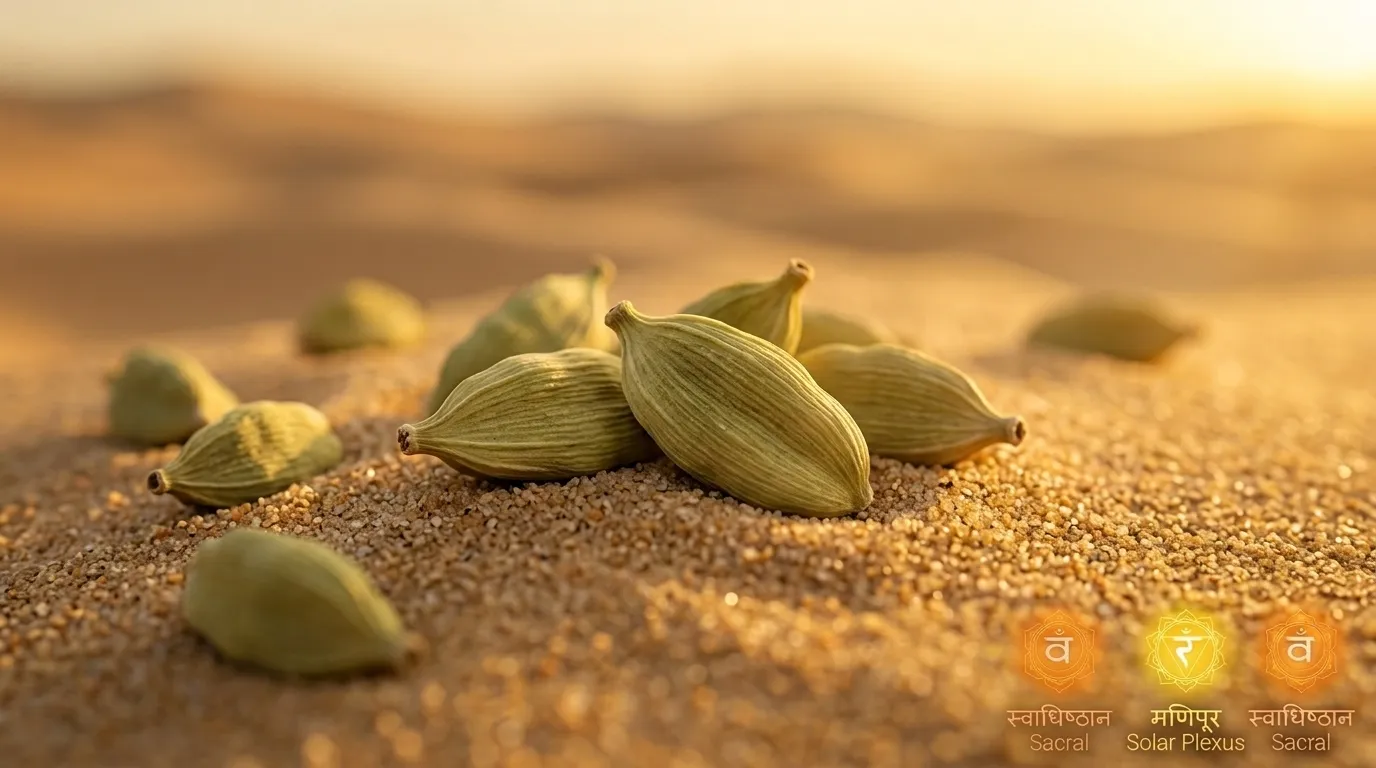
Herb
Cardamom
Are you exhausted by shallow conversation? Cardamom is not merely a spice; it is the guardian of the listening heart. For centuries, this green jewel has graced tables where true intimacy was born from the simple act of making room. Stop fighting to be heard. It is time to step into the ancient power of presence, to open the pod of your own vulnerability, and to remember that the greatest gift you can offer another is the gift of being truly seen.
- Third Eye
- Scientific name: elettaria cardamomum
- Love & Connection
- Clarity
Traditional associations
In the kitchens and gathering spaces of South Asia, the Middle East, and East Africa, green cardamom has long been the quiet herald of hospitality. When a pod is crushed between the teeth or slow-steeped in hot water, it releases not merely flavor but an invitation—the invitation to pause, to listen, to make authentic space for another. Revered in rituals of tea and conversation, this spice has taught generations that true connection blooms not from the noise of many words, but from the golden silence of genuine presence.
Specially sourced
Deep layers
About Cardamom
For those who recognize that true hospitality begins not with words, but with the willingness to create sacred space for another's presence, Elettaria cardamomum offers far more than a spice. The delicate green capsules and seeds carry the ancient memory of South Asian, Middle Eastern, and East African tables where the simple act of sharing opened hearts and dissolved the walls between strangers. When the cardamom pod unfolds—its papery skin yielding its precious seeds—it mirrors the vulnerable opening that real conversation requires. The aromatic lift of green resin, lemon, and eucalyptus calls forth the clarity needed to truly hear another, while the underlying sweetness reminds us that hospitality is an act of love, not obligation.
Yet wisdom asks us to honor both the tradition and the threshold: these cultural and spiritual associations flow through intention and ritual, not through concentrated doses or medical claims. If you navigate sensitivity to spices, pregnancy, nursing, childhood, or regular medication, the concentrated preparations of cardamom require professional guidance before use. Culinary cardamom—woven into foods, drinks, and spice blends—carries a different resonance than isolated extracts. True reverence for this ancient spice means respecting both its spiritual poetry and the boundaries of safety.
Story
In the kitchens and gathering spaces of South Asia, the Middle East, and East Africa, green cardamom has long been the quiet herald of hospitality. When a pod is crushed between the teeth or slow-steeped in hot water, it releases not merely flavor but an invitation—the invitation to pause, to listen, to make authentic space for another. Revered in rituals of tea and conversation, this spice has taught generations that true connection blooms not from the noise of many words, but from the golden silence of genuine presence.
Historical uses
For millennia, green cardamom has graced the tea ceremonies, spice blends, and sweet preparations of South Asia, the Middle East, and East Africa. In hospitality traditions across these regions, the offering of cardamom tea or cardamom-scented sweets became a ritual of welcome, a gesture that said: 'I have made space for you at my table, and your presence here matters.' Herbalists and healers have long steeped the pods and seeds in warm water as part of daily rituals of nourishment and intentional gathering.
Cultural / spiritual uses
In South Asian hospitality rituals, the unfolding of the cardamom pod symbolizes the opening of the heart and the conscious decision to make vulnerable space for genuine connection. In modern spiritual practice, cardamom tea brewed with intention becomes a meditation on presence—a reminder that listening is a sacred act. When shared at the table, cardamom embodies the principle that true nourishment comes not from the food alone, but from the quality of presence and care woven into the act of offering and receiving.
Aroma profile
A luminous complexity of green resin and bright lemon, accented by an eucalyptus-like clarity and the warmth of sweet spice beneath. Floral whispers emerge as the pod opens, creating an aromatic signature that invites both grounding and uplift.
Preparation notes
Traditionally, whole green cardamom pods are lightly crushed between the teeth or gently pressed to release their oils, then steeped in hot water for tea, or added whole to foods, rice dishes, and spice blends. Seeds may be extracted and ground fresh for maximum aroma. No concentrated extract, essential oil dose, or medicinal prescription is offered here; this record honors culinary and ritual use only. Always source cardamom from reputable suppliers who can verify the botanical origin and absence of artificial additives.
Season / harvest
Green cardamom capsules are gathered in late monsoon and early autumn, harvested just before full maturity to preserve their pale green hue and concentrated volatile oils. The pods are then carefully dried, a process that both preserves their delicate color and intensifies their aromatic potency. True green cardamom should never show artificial dyes; the color is the gift of proper timing and patient drying.
Safety notes
Caution is advised for those sensitive to spices or members of the cardamom family. Culinary amounts woven into foods and beverages are distinct from concentrated preparations. Do not apply essential oils or concentrated extracts near eyes or mucous membranes. Before using concentrated cardamom products, seek professional medical guidance if you are pregnant, nursing, giving cardamom to children, or taking regular medications.
Origin
Authentic green cardamom originates from Elettaria cardamomum, cultivated in the misty highlands of South India where monsoon rains and shade-drenched soil create the conditions for these aromatic capsules to develop their full spectrum of volatile oils. Black cardamom, by contrast, emerges from entirely different botanical sources and carries a distinct, smokier character. The green variety—with its pale, papery skin and precious dark seeds within—has traveled the ancient trade routes to become woven into the fabric of Middle Eastern, East African, and South Asian tradition.
Quick look
Scientific name: elettaria cardamomum
Properties
- Scientific name
- elettaria cardamomum
Which chakra is it known for?
Which chakra is it associated with?
- Third Eye
Follow This Thread
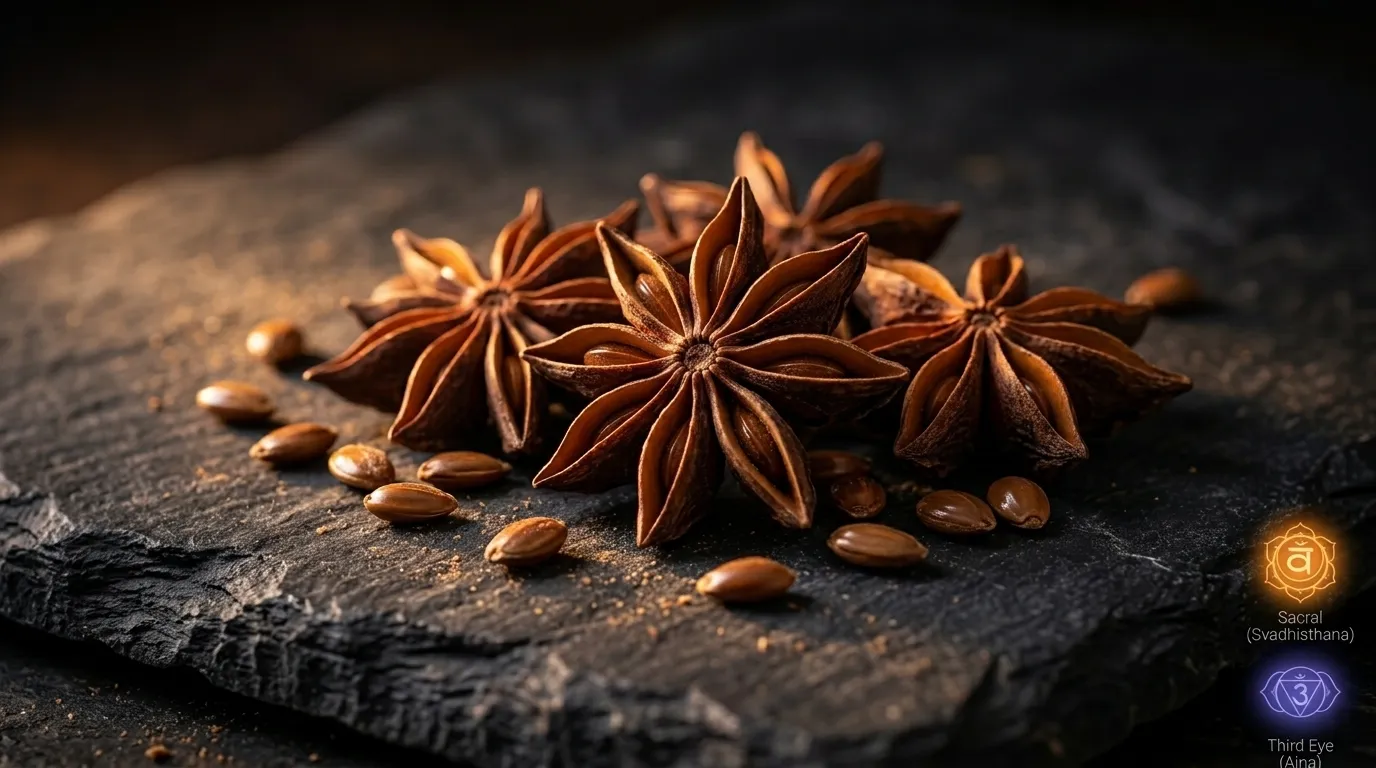
Herb
Anise
Shared intention: Love & Connection · third-eye chakra theme

Stone
Fluorite
Shared intention: Clarity · third-eye chakra theme

Meditation
Speaking the Heart's Language: Rose Oil
Shared intention: Love & Connection · Clarity

Test
Third Eye Mini Discovery
The Third Eye chakra discovery maps to this intention
If you stayed this long on the Cardamom page, the matter may not be curiosity about herbs alone.
The chosen herb is sent in a solid walnut box with brass inlay, sealed to your name. Which herb walks with you is decided not from a list, but from what you share.
No payment, no commitment. First you write what you want.