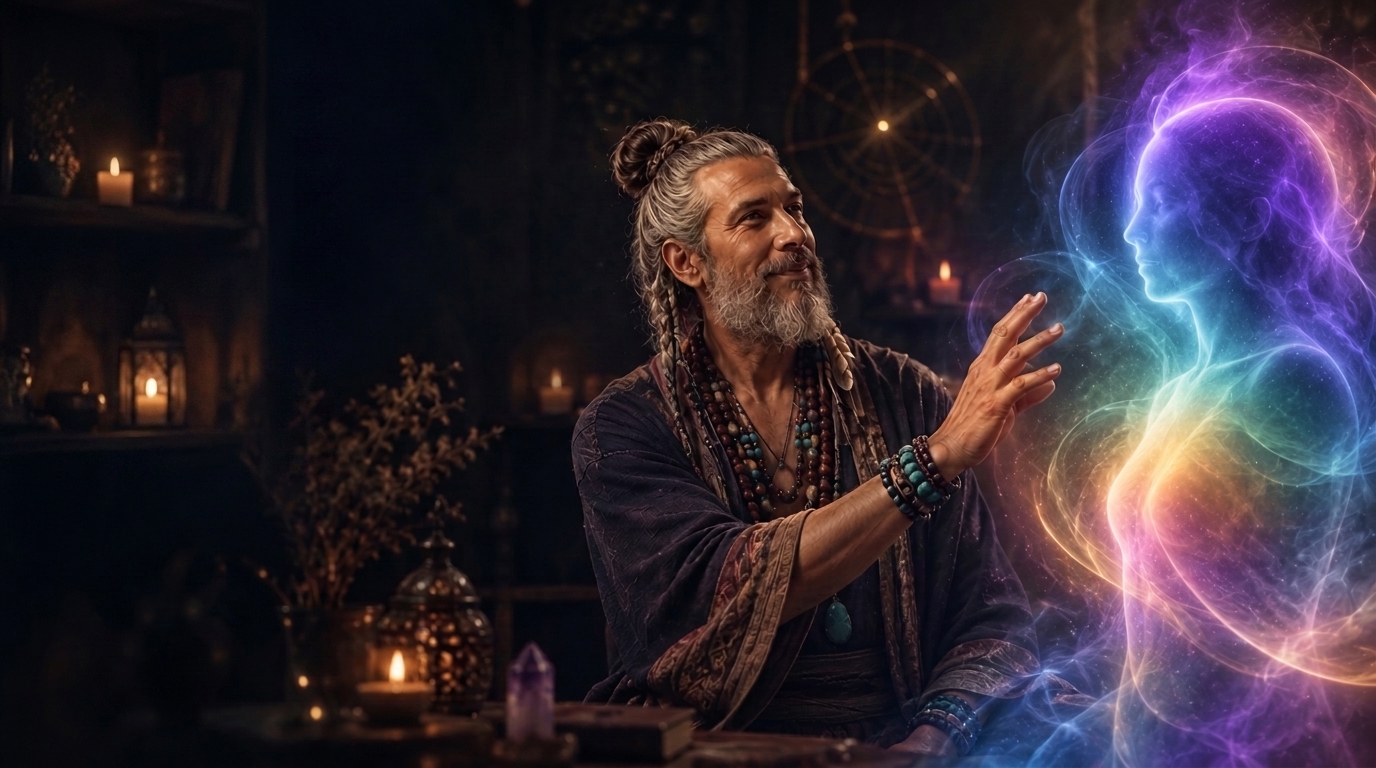
The aura rests on the idea that a light or halo surrounds the human body. This idea belongs to no single tradition and has no single definition; it appears in different forms in different cultures.
THE AURA AND LIGHT
Placing light around the human figure is a very old visual tradition. The halo in Christian iconography, the circles of light serving the same purpose in Buddhist and Hindu depictions, the radiant crowns of ancient imagery — all are symbolic devices used to indicate holiness, wisdom or a privileged state.
These are not measurements or records of observation but a way of telling: the artist uses light to make the figure's inner quality visible from the outside.
THE MODERN AURA READING
Today's aura narrative, in which colors are matched to emotions and moods, took shape largely in the late 19th and early 20th centuries. Writers in Theosophical circles published descriptions claiming that a colored field surrounds a person and that these colors reflect character; over time those descriptions settled into popular culture.
These interpretations have no scientific basis. No measurable colored field around a person has been demonstrated; the methods known as aura photography image electrical and thermal effects, not an “energy field”.
CHAKRAS AND COLORS
The roots of the chakra concept are old: the yoga and tantra texts of the Indian tradition speak of energy centers in the body. But the systems in those texts differ from one another — the number, location and qualities of the centers vary by source.
The pairing of the seven chakras widely known today with the seven colors of the rainbow, in order, is far more recent; it settled in during the 20th century through Western interpretations. In other words, the chakra idea whose “roots go back thousands of years” and the “seven-color chakra chart” are not the same thing.
An Aura Portrait does not turn this symbolic language into a claim of scientific measurement; it opens a visual space for you to explore the world of color that forms over your own photo, together with its traditional symbols.