

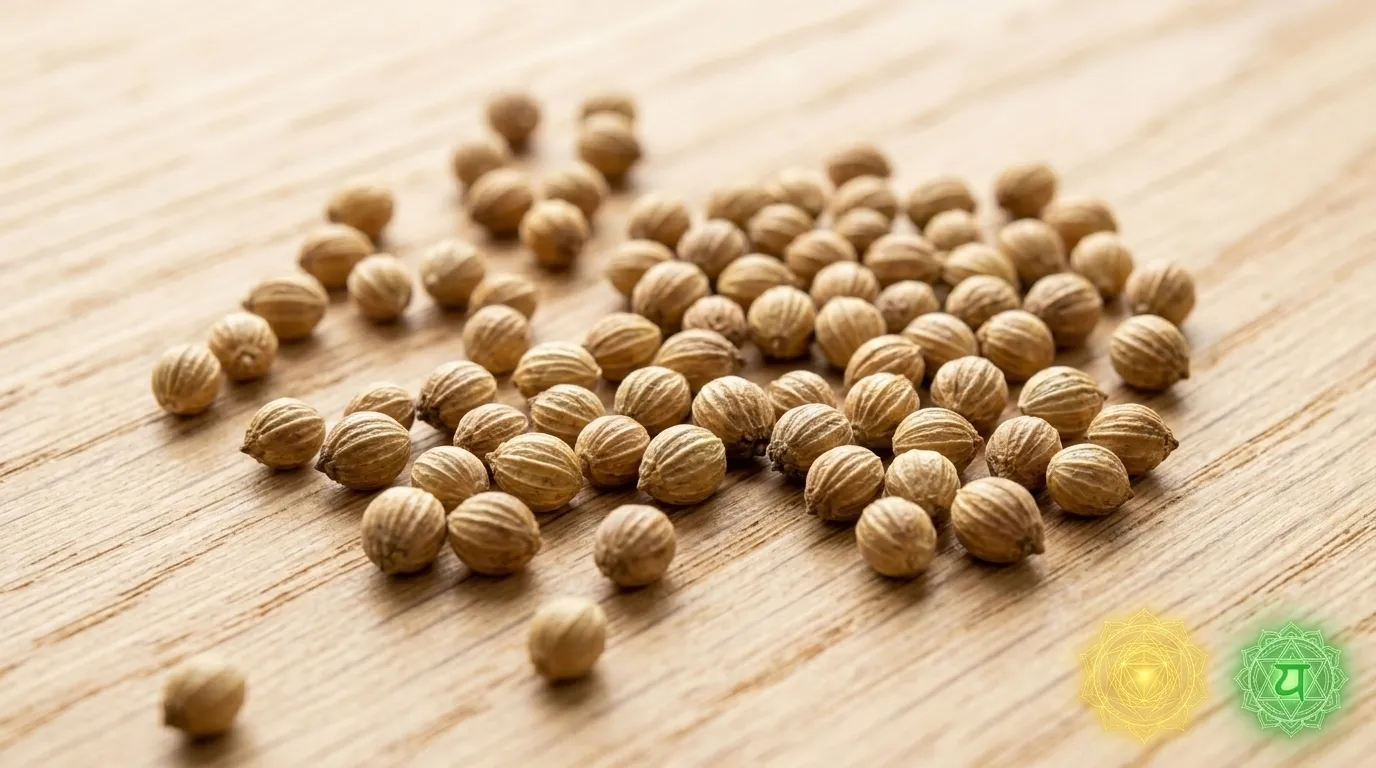
Herb
Coriander
Are you exhausted by the demand to be just one thing? Coriander is not a plant of simplicity; it is a plant of permission. Leaf and fruit speak in different tongues, yet flow from the same root. Stop shrinking yourself to fit a single story. Breathe in the warm spice and the sharp green. You contain multitudes, and the earth celebrates it.
- Sacral
- Solar Plexus
- Scientific name: coriandrum sativum
- Clarity
Traditional associations
Coriander has journeyed across continents for millennia, from Mediterranean gardens to the spice markets of South Asia, honored by cultures that understood: the same plant can speak in many languages and remain itself. Its leaf and fruit travel separate paths yet share one origin—a living metaphor for those who feel split between worlds.
Specially sourced
Deep layers
About Coriander
For those who feel fragmented between identities, Coriandrum sativum offers a profound botanical lesson: the same plant yields two entirely distinct aromatic signatures, each complete, each true. The delicate leaves speak in sharp, verdant whispers of fresh possibility, while the dried fruits resonate with warm spice and citrus depth—two voices, one root. This duality is not contradiction; it is the earth's permission to contain multitudes within a single being. In the presence of this plant, the exhausting question 'which am I really?' dissolves into the liberating knowing that you are all of these, and none of them diminish the whole. The coriander plant teaches that transformation and consistency need not oppose each other; they are the same journey viewed from different seasons.
Yet, true reverence acknowledges limits: those with sensitivity to the parsley family must approach with measured care. Pregnant, nursing, or medicated individuals should seek professional guidance before regular or concentrated use. The plant's wisdom flows through intention and respect for the body's own intelligence. Let coriander's dual nature remind you that wholeness is not sameness—it is the fierce grace of holding your own contradictions and calling them home.
Story
Coriander has journeyed across continents for millennia, from Mediterranean gardens to the spice markets of South Asia, honored by cultures that understood: the same plant can speak in many languages and remain itself. Its leaf and fruit travel separate paths yet share one origin—a living metaphor for those who feel split between worlds.
Historical uses
From ancient Mediterranean temples to South Asian kitchens, coriander has been woven into ritual and sustenance. Its leaf and fruit were never interchangeable—each earned its own place in different traditions, reflecting a wisdom older than modern demand for singular identity.
Cultural / spiritual uses
In modern intention work, coriander's dual nature has become a symbol for those navigating multiple identities without shame. The leaf and fruit ceremony invites practitioners to honor each voice within themselves as complete and valid, teaching that wholeness is not fusion but fierce acceptance of contradiction.
Aroma profile
The leaf exhales sharp, metallic green with bright citrus whispers—a scent of clarity and awakening. The fruit radiates warm spice, amber-gold resonance, and subtle citrus depth—a scent of grounding and transformation. Two complete aromatic worlds in one botanical being.
Preparation notes
The leaf is used fresh or gently dried, preserving its bright, verdant character. The fruit is dried and often gently crushed, releasing its warm spice warmth. These are not substitutes; they are collaborators in different dishes, each bringing its own complete identity to the whole. This text offers no dosage guidance; always source clean, authentic botanical material and prepare with intention.
Season / harvest
Leaves are gathered during the plant's flowering season, capturing their volatile essence at peak vitality. Fruits are harvested when the umbels dry to golden brown, concentrating their warm spice signature. The two harvests honor the plant's two voices.
Safety notes
Those with sensitivity to the Apiaceae (parsley) family should proceed with caution. Pregnant, nursing, or medication-dependent individuals must consult professional healthcare providers before regular or concentrated use. Respect the body's boundaries as you honor the plant's power.
Origin
Coriandrum sativum grows patiently in sun-blessed soil, its leaves and seeds developing distinct volatile oil signatures. The leaf speaks brightness and verdancy; the fruit speaks warmth and depth. One plant, two complete selves.
Quick look
Scientific name: coriandrum sativum
Properties
- Scientific name
- coriandrum sativum
Which chakra is it known for?
Which chakra is it associated with?
- Sacral
- Solar Plexus
Follow This Thread

If you stayed this long on the Coriander page, the matter may not be curiosity about herbs alone.
The chosen herb is sent in a solid walnut box with brass inlay, sealed to your name. Which herb walks with you is decided not from a list, but from what you share.
No payment, no commitment. First you write what you want.