

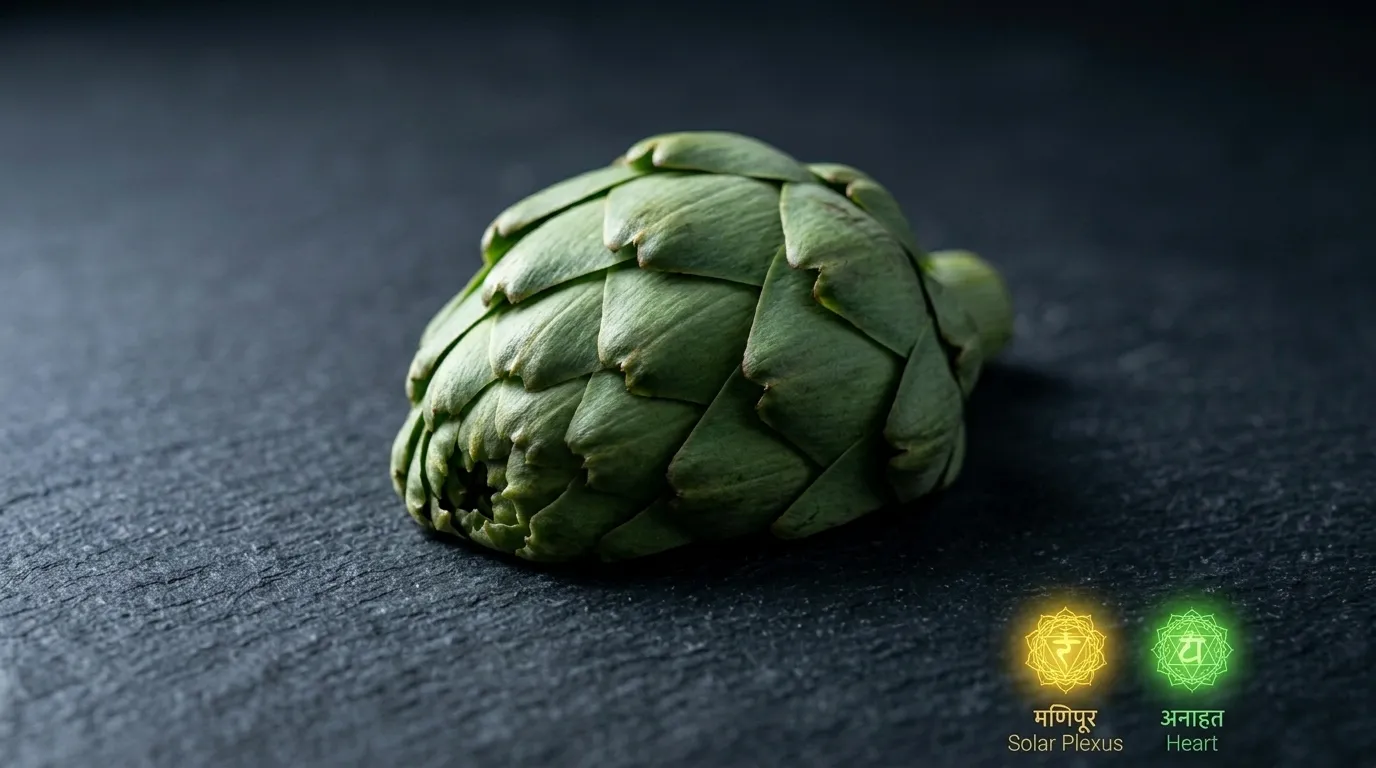
Herb
Artichoke
Are you tired of the myth that wholeness demands complete exposure at once? The artichoke holds a secret: the deepest treasures are reached not through violent rupture, but through patient, reverent descent. Layer by layer, this ancient sentinel teaches the soul that true strength is knowing when—and how—to soften.
- Solar Plexus
- Scientific name: cynara cardunculus
- Protection
- Love & Connection
Traditional associations
In Mediterranean gardens where time moved like honey, the artichoke was never rushed. Ancient herbalists understood that its layered mystery was a teaching tool—each petal a whisper of the soul's own journey toward wholeness. To eat the artichoke, or to honor its leaves in ceremony, was to enter into covenant with patience itself.
Specially sourced
Deep layers
About Artichoke
For the soul seeking permission to release its armor slowly, Cynara cardunculus offers not a violent opening, but an initiation into the wisdom of gradual unfolding. The artichoke, with its tightly layered flower head and bitter leaves, mirrors the protective circles we build around our deepest truths. Each layer you lower is not a defeat—it is a deliberate act of courage, a conversation between your guarded heart and the world's gentler invitation. The Mediterranean ancients understood this: they did not consume the artichoke in haste, but honored it as a meditation on trust, layer by measured layer, until the tender crown reveals itself to those patient enough to witness it.
Yet wisdom demands clarity: the culinary flower head and the traditionally referenced leaf are distinct expressions of this plant, each carrying its own properties and applications. To engage with artichoke—whether as food, as leaf infusion, or as spiritual symbol—is to honor both its botanical complexity and the boundaries of your own body. Those with sensitivities to the Asteraceae family, concerns about bile flow, or ongoing medications must seek professional guidance before use. The artichoke's teaching is not about reckless exposure, but about the sacred marriage of self-knowledge and intentional surrender.
Story
In Mediterranean gardens where time moved like honey, the artichoke was never rushed. Ancient herbalists understood that its layered mystery was a teaching tool—each petal a whisper of the soul's own journey toward wholeness. To eat the artichoke, or to honor its leaves in ceremony, was to enter into covenant with patience itself.
Historical uses
For centuries, Mediterranean cultures honored the artichoke in both the kitchen and the chamber of healing ritual. The Flower head nourished the body; the leaf infusion was prepared in evening silence, a bitter medicine for those learning to trust their own unfolding.
Cultural / spiritual uses
In modern spiritual practice, the artichoke's unfurling layers symbolize the soul's permission to release its armor—not all at once in a desperate flood, but intentionally, reverently, one breath at a time. To meditate upon the artichoke is to remember: the core is precious precisely because it was protected. The journey inward is sacred work.
Aroma profile
The leaf carries green, grounded bitterness—earth after rain, dried sage, and the mineral whisper of ancient soil. The flower head offers softer tones: green stems yielding to subtle vegetal warmth and a faint, honeyed nuttiness that speaks of patience rewarded.
Preparation notes
The artichoke reveals its wisdom through distinct preparations: the tender flower head as nourishment, slowly steamed or roasted into submission; the leaf as a slow infusion, steeped in intention and hot water. No dosage claims are offered here—only the invitation to source authentic botanical material and honor the plant's complexity through your own ritual.
Season / harvest
Flower heads are gathered before their opening, at the threshold of revelation. Leaves are harvested during the plant's vigorous growth, when their potency concentrates. The timing is sacred; harvest too early and the promise remains sealed; too late and the gift has already scattered.
Safety notes
Caution is essential for those with Asteraceae family sensitivities. Do not use concentrated preparations without professional guidance if you have bile flow concerns or take regular medications. The part used—flower head versus leaf—must be clearly distinguished, as their properties differ.
Origin
The authentic Cynara cardunculus represents a botanical distinction: the flower head used in culinary tradition and the leaf referenced in traditional herbal practice are separate expressions of the same plant family. Mediterranean soils, kissed by ancient sun, cultivate this plant's layered complexity.
Quick look
Scientific name: cynara cardunculus
Properties
- Scientific name
- cynara cardunculus
Which chakra is it known for?
Which chakra is it associated with?
- Solar Plexus
Follow This Thread
If you stayed this long on the Artichoke page, the matter may not be curiosity about herbs alone.
The chosen herb is sent in a solid walnut box with brass inlay, sealed to your name. Which herb walks with you is decided not from a list, but from what you share.
No payment, no commitment. First you write what you want.